
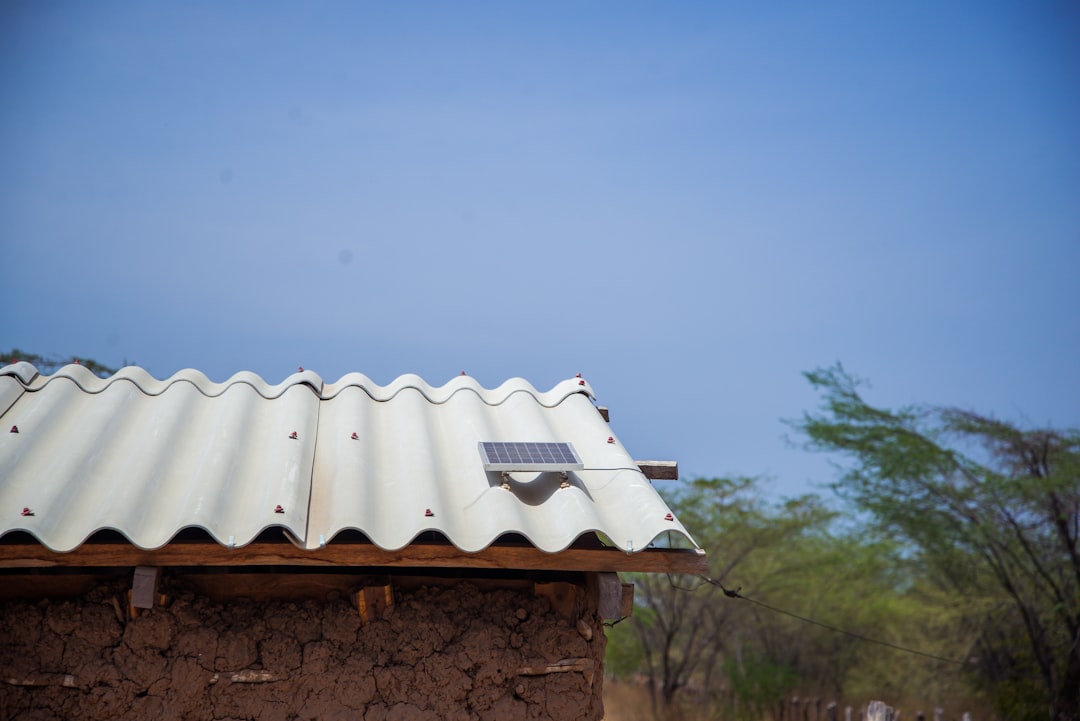
Not long ago, the story of energy in Africa was told almost entirely through the lens of scarcity. Blackouts. Load shedding. Households and clinics and schools running on diesel generators, or not running at all. For much of the world, that story persists — more than 600 million people on the continent still lack reliable electricity access.
But Ghana is writing a different chapter. And in 2026, the pace of that chapter has accelerated significantly.
Ghana’s Energy Milestone
Ghana’s electricity access rate has now surpassed 89 percent — placing the country among the leading nations in sub-Saharan Africa. That figure, confirmed by the Ministry of Energy and Green Transition at the second Ghana Green Investment Dialogue in Accra in May 2026, represents decades of investment in grid expansion, hydropower, and increasingly, solar and mini-grid systems.
The remaining 11 percent — concentrated in remote communities, island settlements, and northern regions — is now the explicit priority. The government’s expansion drive, led by the Ministry of Energy and Green Transition, focuses on solar power systems, mini-grids, rooftop solar installations, and off-grid renewable energy solutions designed specifically to reach those the national grid has not yet served.
What Is Being Built — Right Now
The projects underway in Ghana are substantial. The Ghana Scaling-Up Renewable Energy Programme — backed by the African Development Fund, the Climate Investment Funds, the Swiss government, and the Ghanaian government — is deploying 12,000 net-metered solar systems for households, establishing 35 mini-grids serving 47 island communities, and providing 1,450 solar home systems for off-grid households. Solar power will also reach 750 small and medium-sized enterprises, 400 schools, and 200 health centres, with island and northern communities the priority.
The Bui Power Authority — Ghana’s most active public developer — has launched the country’s first floating solar installation on the Black Volta River, with plans to scale it significantly. An $85 million programme targeting 70,000 people in remote communities is also underway. The International Finance Corporation has approved a $100 million facility for a 150-megawatt solar development in Dawa, with the first 100 megawatts due by October 2026.
Meanwhile, Ghana and Switzerland jointly launched a $200-million National Clean Energy Programme to develop 137 megawatts of rooftop solar photovoltaic capacity across approximately 4,000 installations. Africa as a whole invested $34 billion in clean power technologies between 2020 and 2025 — 52 percent of which went to solar energy, according to the State of African Energy 2026 Outlook Report.
Why 2026 Is Different
Solar energy in Africa has been promising for years. What makes 2026 different is that the conversation has moved from pilots to deployment at scale. At the Ghana Green Investment Dialogue, Deputy Director Dr Robert Sogbadji issued a direct challenge to stakeholders: “Move beyond pilot projects and begin large-scale renewable energy deployment.”
Analysis from SolarQuarter points to several converging forces: falling solar panel costs, new blended finance mechanisms de-risking private investment, pledges totalling over $50 billion in new commitments for African renewables at international climate forums, and growing domestic political will for clean energy transition. The continent holds around 60 percent of the world’s most promising solar resources — and is finally beginning to build for it.
Energy Is Not Just About Electricity
The deeper significance of Ghana’s solar expansion is what energy access makes possible. A solar panel on a health centre roof means vaccines can be refrigerated, surgeries can happen after dark, and women can give birth in a lit room. Solar power at a school means evenings can be used for study. Mini-grids reaching farming communities mean agro-processing can happen locally, reducing post-harvest losses and supporting livelihoods. The electricity itself is only the beginning.
This is exactly the logic that drives Global Action Network’s energy work. Our programmes in Ghana focus on the intersection of clean energy and community resilience — recognising that sustainable energy is not just a climate issue but a health issue, an education issue, an economic issue, and a gender equality issue. The communities that gain reliable, clean energy gain the infrastructure for everything else.
The Constraint: Capital, Not Technology
Ghana’s progress is real, but the challenge ahead is significant. The country’s electricity demand is growing at approximately 10 percent annually, requiring generation capacity to reach roughly 4,200 MW by 2026. Africa Energy Portal analysis makes clear that technology is no longer the bottleneck — access to affordable, long-term finance is. Solar panel costs have fallen by over 90 percent since 2010. The engineering is proven. What projects need is patient capital that matches the long-term returns of energy infrastructure.
To achieve the projected 23 GW of new solar installations across Africa by 2028, governments, investors, and development partners must work together to unlock concessional financing, expand blended finance instruments, and mitigate risk for both large-scale and emerging solar developers. Ghana’s national net-metering framework — allowing households and businesses with rooftop solar to feed excess electricity into the grid — is one policy tool that, once launched, will accelerate private investment significantly.
A Continent Leading — Not Following
The old framing of Africa as a recipient of energy solutions is being replaced by a new reality. African nations — led by voices from Nigeria, Ghana, and South Africa — are advocating at global climate forums for economic room to leverage solar growth while transitioning from fossil fuels, securing agreements for technology transfers and concessional loans. The continent holds 60 percent of the world’s best solar resources, is home to the fastest-growing populations and economies on earth, and is increasingly setting its own clean energy agenda.
Ghana is not waiting to be powered. Ghana is powering itself. And the rest of the continent is watching.
Support Ghana’s Clean Energy Communities
Global Action Network works directly with communities in Ghana and West Africa on clean energy access, sustainable infrastructure, and community resilience. Your support funds the work that makes energy transition real at the community level — not just on paper.
Sources: Ghana News Agency · Ghana Business News · Corporate Knights — Solar Africa 2026 · SolarQuarter — Africa Turning Point · Africa Energy Portal